What Is Cloud Computing and How Does It Benefit Businesses?
The modern technological era has seen organizations looking for ways to become more efficient and cost-effective while being able to move swiftly in their competitive environment. Among one of those technological solutions that has transformed the way organizations do business is cloud computing. The question is, what is cloud computing and its importance in modern businesses?
What Is Cloud Computing?
Cloud computing can be defined as the provision of computing services such as server, storage, database, networking, software, or big data analytics based on the internet, often referred to as “the cloud.” Rather than storing their computational platforms in-house, companies rely on the cloud for their services.
This facilitates scaling, adapting, and innovating not constrained by the restrictive nature of typical information technology architecture.
The Ultimate Advantages of Cloud Computing for Organizations
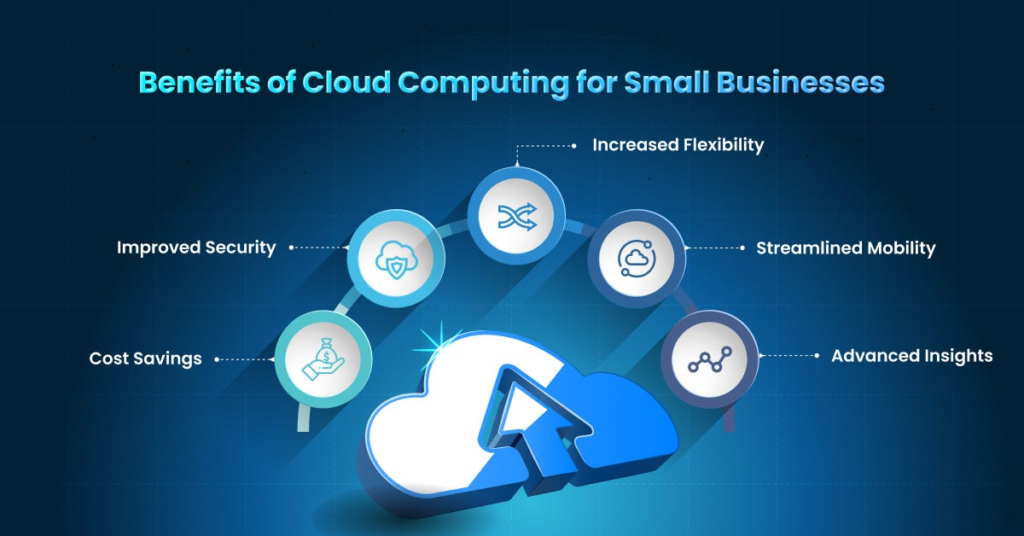
1. Cost Efficiency
Cloud computing makes it unnecessary to invest in pricey in-house equipment while also cutting down costs with respect to maintenance of IT. A company can only pay for what it consumes when it comes to technology.
2. Scalability and Flexibility
Today, businesses are required to respond swiftly to ever-changing demands. Cloud computing enables businesses to easily scale up or down, depending on their needs, whether it involves more website traffic, larger data sets, or more distributed teams. With this, businesses can easily grow beyond the limitations of their infrastructure.
3. Improved Collaboration
The cloud platform allows employees to easily access documents, applications, and tools from any location with internet connectivity. The cloud platform allows collaboration between employees in real time. This has been quite helpful in the modern age of hybrid or remote working.
4. Data Security and Reliability
Cloud service providers spend a lot of resources on the implementation of various measures, such as encryption, threat protection, and backup processes. These capabilities enable businesses to safeguard their sensitive data and ensure continuity in case of failure or attacks.
5. Automatic Updates & Maintenance
One of the advantages of cloud computing is that it enables all forms of updates, security patches, as well as system updates, to be conducted by the providers. This is a crucial aspect because it ensures that all organizations have access to up-to-date technology.
6. Access to Advanced Technologies
The cloud computing system enables organizations or corporations to take advantage of modern technology such as artificial intelligence, big data, or machine learning. This is intended to enable organizations to make better and more accurate decisions.
The Significance of Cloud Computing in the Year 2025
As the business environment continues to be increasingly competitive and dynamic, cloud computing services are the key that businesses require in order to stay at an edge. Those businesses that embrace cloud computing services are able to innovate and serve their clients in a better way.
Conclusion Cloud Computing, far from being a passing fad, has proven to be a valuable and powerful tool that helps businesses perform smarter, faster, and more securely. With the help of cloud computing, companies will be able to move beyond worrying about the intricacies of cloud operations. For today’s enterprises, cloud computing is not a choice–it’s a path to productivity, elasticity, and a bright future.